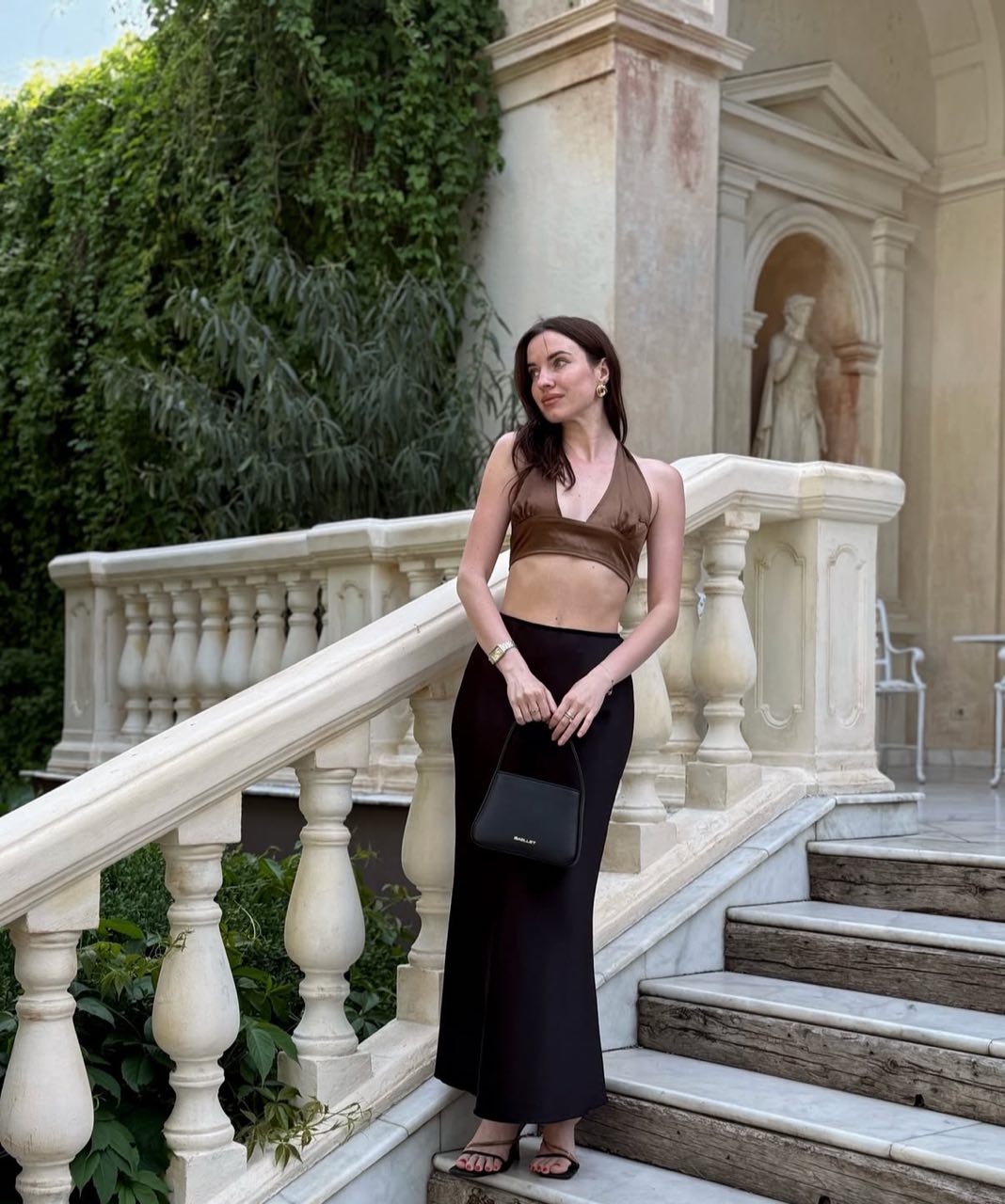
I’ve been noticing a shift at the salon lately. More women are asking for brunette bases with blonde pieces woven through, not full blonde. It’s a smarter way to go darker without losing all the lightness. I call it the compromise that actually works.
This roundup of 24 ideas for Blonde to Brunette Hair covers everything from low-maintenance root shadows to high-contrast balayage. Whether your hair is fine and straight like mine (flat by 4 pm, I know) or thick and curly, there’s a version here that flatters your face shape and fits your real life. No one-size-fits-all, just honest options.
Deep Brunette With Caramel Blonde Highlights

I wasn’t prepared to fall for a dark base with caramel highlights, but here we are. This is deep brunette with caramel blonde highlights, and the warmth is what gets you. The technique uses fine highlights scattered through long layers, so the tone stays rich, not brassy. On mid-back length with wavy, thick texture, the colour reads dimensional, not flat. A middle part lets the caramel catch the light. No bangs, just loose waves that show off the blend.
Dark Brown With Sun-Kissed Balayage

This is the best grow-out I’ve seen in a long time. I watched a friend get this dark brown balayage blonde last spring, and her roots grew in for four months without a harsh line. The sun-kissed effect comes from a hand-painted technique that leaves the tone soft and natural. On mid-back length with wavy, thick texture, the colour looks like it caught the sun from the side profile. The technique is balayage, so the colour is concentrated on the mid-lengths and ends. A side part and loose waves keep it relaxed. No bangs, just layers that blend the dark base into blonde. The grow-out is forgiving enough to stretch touch-ups to every 12 weeks. The tone stays warm, not brassy, thanks to the balayage placement.
Textured Bob With Subtle Blonde Balayage

The mistake most people make with a textured bob is asking for ‘texture’ without specifying where. This brunette bob blonde balayage gets it right: a dark brunette base with subtle blonde balayage that starts below the ears. The tone is soft, not contrasty, and the technique is balayage, so the colour melts into the ends. On chin length with wavy, fine texture, the side-swept bangs and side part keep it from looking too precious.
The mistake is thinking texture means layers everywhere. That gives you a ragged outline, not a soft one. Dodge it by telling your stylist you want the dark roots to stay visible, with the balayage concentrated on the mid-lengths and ends. The contrast between dark roots and lighter ends is what makes this bob work. The wavy fine texture holds the tousled shape without needing much product. The side-swept bangs soften the forehead. A trim every 6-8 weeks keeps the shape, and the colour can go 10-12 weeks between touch-ups.
Dark Brown To Blonde Ombré Curls

Balayage or ombré: which lasts longer? Ombré has a defined transition, so it’s bolder, but shows grow-out faster. For this dark brown blonde ombré, the technique is a clear demarcation from dark roots to blonde ends. The tone is cool blonde, not warm, and the length is mid-back with wavy, medium density texture. Loose defined curls and a middle part emphasize the contrast. The grow-out is more obvious than balayage, but if you want a statement, this is it.
Blonde Bob With Curtain Bangs

I’ll admit, I was skeptical about a blonde bob with curtain bangs. But this dark blonde to light blonde bob works because the contrasting blonde highlights add depth, not just brightness. The technique uses highlights that go from dark at the roots to light at the ends, so the tone is dimensional. On chin length with wavy, thick texture, the curtain bangs soften the forehead and the middle part balances an oval face. It flatters heart-shaped faces too. Skip it if your hair is very fine, the contrast can look harsh. If you have a round face, the bangs might widen it. But for thick, wavy hair, this is a solid choice.
Mid-Back Dark Brown To Honey Blonde Curls

Monday morning curls, still intact by Friday. That’s the promise of this dark brown honey blonde balayage on thick, curly hair: the balayage technique places the honey blonde highlights strategically so they don’t get lost in the volume, and the tone stays warm without turning brassy. At mid-back length, the defined curls have enough weight to hold their shape through a week of heat and humidity.
The real test is day three. My curls usually droop by then, but the layering in this cut gives each curl a distinct spring. The colour doesn’t fade into a muddy mess either — the balayage grows out softly, so you can stretch the salon visit to ten weeks. It’s not a low-maintenance look, but it’s a reliable one.
Short Bob With Honey Caramel Curls

This bob stops me every time. The dark brown honey caramel bob with honey blonde and caramel highlights takes a full afternoon in the salon — the balayage technique needs precision to place those warm tones against the dark base. At ear length, the defined curls require a trim every four to six weeks to keep the shape sharp, and the colour needs a touch-up every eight to ten weeks. It’s a commitment, but the contrast is worth the chair time.
Warm Brown With Honey Blonde Bangs

This is the colour that makes me want to book a salon appointment for fall. The warm brown honey blonde highlights on a mid-back length with side-swept bangs catch the light exactly the way autumn sun does. The base is a warm brown, not ashy, so the honey blonde tone blends naturally. The technique is a soft balayage that keeps the highlights concentrated around the face, which makes the bangs pop. The texture is wavy and medium density, so the loose waves hold the colour’s dimension without frizzing. It’s a ten-minute styling day, and the highlights last ten to twelve weeks before they need a refresh.
Visual Idea

The blend here is so seamless that the transition from brunette to blonde reads like a single colour. The technique is a fine balayage, painted in narrow sections along the collarbone-length lob, so the blonde tone melts into the brunette base without a hard line. The tone is a soft, neutral blonde — not too warm, not too ashy — which keeps the contrast subtle. The texture is wavy and medium density, and the loose waves help the colour ripple naturally.
What makes this work technically is the placement: the balayage starts a few inches from the roots, so the grow-out is invisible for weeks. The middle part splits the colour evenly, and the lack of bangs means the focus stays on the smooth transition. It’s a lob that doesn’t need constant toning, just a trim every eight weeks to keep the ends tidy.
Mid-Back Visual Idea

Want to recreate this at home without a salon visit? Start with a dark blonde base and add lighter blonde highlights using a home balayage kit — paint the lightener on the mid-lengths and ends, avoiding the roots. The technique is a freehand balayage, so the tone shifts gradually from dark to light. On mid-back length with thick, wavy texture, the loose waves disguise any unevenness. It’s not perfect, but it gets close enough for a fraction of the chair time.
Brunette Base With Blonde Balayage Visual Idea

I’ll admit, I’ve seen a lot of balayage that lands closer to stripes than sunlight. This one earns the seamless label. The brunette base stays deep and cool, a neutral brunette that doesn’t lean ashy or red. The blonde balayage lifts to a warm, honeyed tone that moves with the waves. Mid-back length gives enough canvas for the gradient to stretch, and the layers keep it from looking heavy. That thick, wavy texture is what makes the blend look natural – no lines, no harsh demarcation. No bangs, middle part, back view shows the colour shift from root to tip. When you’re making the switch from blonde to brunette hair, this is the kind of result you want.
Collarbone Visual Idea

The side view catches the way the highlights fall, curving with the lob’s shape. Collarbone length, no bangs, middle part, loose waves. Brunette base, blonde highlights – that’s the scene.
The highlighting technique here is fine and face-framing, with the brightest pieces hitting just above the shoulder. That matters because it draws the eye outward, not straight down. The tone stays neutral: the brunette base reads slightly cool, the blonde highlights lean warm but not yellow. The loose waves are styled with a soft bend, not a tight curl, so the colour reads as dimension rather than stripes. Medium-density wavy hair holds the wave without losing the highlight pattern, and the collarbone length keeps the shape compact. The contrast is subtle enough that the roots blend naturally as they grow. No harsh lines, no stripe effect. Just a woman who looks like she might have been born with those lighter pieces.
Chin Visual Idea

The first thing I noticed was the contrast. Dark brown base with blonde balayage, chin length, no bangs, middle part, slightly textured waves. The blonde tone is warm enough to stand out against the dark, but not so light it looks glued on. The balayage placement concentrates the light pieces at the ends, so the root stays deep. The contrast reads as deliberate, not accidental.
Long Layers Visual Idea

The mistake most people make with an ombré is thinking it’s no-maintenance. This is long layers, mid-back, dark brown base fading to blonde ends, thick wavy texture, loose waves, no bangs, middle part. The dramatic ombré effect works because the transition starts low – around the collarbone – so the dark roots stay intact for months. But where people slip is choosing a tone that clashes with their base. This one, the blonde ends lean warm, the dark base is neutral, so the two don’t fight. The layers also help: they break up the colour line so it doesn’t look like a dip-dye. If you want a true ombré, ask your colourist to keep the darkest shade at the root and start the fade below the shoulder.
Dark Blonde To Light Blonde Balayage Visual Idea

This isn’t your standard balayage. The base is already a dark blonde, and the balayage lifts the ends and mid-lengths to a light blonde. Mid-back length, layered, no bangs, middle part, loose curls, thick wavy texture. It’s a within-blonde transition, not a brunette-to-blonde jump.
What sets it apart from an all-over light blonde is the depth it keeps. The dark blonde at the root reads as intentional, not grown-out. The balayage technique places the lightest pieces lower, so the tone brightens gradually. Foil highlights would give a more uniform lift, but the balayage gives that gradient that feels more natural, especially on a thick wavy texture. The curls help disguise where the colour changes, and the tone runs warm, not icy, so it suits a dark blonde base that doesn’t want a stark contrast. If you’re going from dark blonde to light without committing to a full bleach, this is the method that looks like you planned it. It’s the difference between a transition and a transformation.
Lob Visual Idea

Thinking about a Blonde to Brunette Hair change? This lob shows how a balayage technique can ease the transition. The colour lifts from a deep brunette base to a warm blonde tone, hitting collarbone length. The wavy texture adds body. It flatters oval and heart-shaped faces best. Skip it if your hair is very fine or your face is round — the middle part and blunt ends can exaggerate width.
Dark Brown Base With Blonde Balayage Visual Idea

I’ll admit, I was skeptical about a Blonde to Brunette Hair combo with such bright ends. But here’s the reality: the dark brown root means you can go six weeks between touch-ups, and the balayage technique keeps the grow-out line soft. The tone stays a clean blonde for about four washes before it needs a purple shampoo refresh. The collarbone length works for medium-density wavy hair — it holds a loose wave without falling flat. The middle part keeps the colour symmetrical. It’s not a low-maintenance look, but the payoff is that your roots don’t scream for attention every month.
Lob Layers Visual Idea

She walked into the salon with a blonde bob and walked out with a brunette lob with layers. The root shadow technique blends the blonde into a deeper brunette base, with subtle lowlights adding dimension. The collarbone length and side-swept bangs frame the face without overwhelming it. The wavy texture is encouraged, not fought.
Here’s what it costs: a full salon session for the root shadow and lowlights, plus a cut for the layers and bangs. Expect to sit for about three hours. The root shadow buys you eight weeks before the blonde starts peeking through, but the bangs need a trim every four weeks to stay out of your eyes. The layers mean you can’t just let it air-dry — a quick blow-dry with a round brush keeps the shape. It’s an investment, but the result is a seamless Blonde to Brunette Hair transition that looks intentional.
Layers Visual Idea

This looks expensive. It is a side-part, collarbone-length blowout with thick, wavy layers and a brunette base shot through with blonde highlights. The gold tone catches the light first, then the warm brown shows underneath, a double take built by the colour technique. No root shadow, no balayage, just foil highlights placed to rise with the wave. On a thick head of hair, it lands as weightless and full at the same time.
Bob Visual Idea

The blunt chin-length bob sits straight on medium-density hair, but this one has a side part and textured waves, so the baseline reads as soft, not surgical. The dark brown base gets its movement from caramel and blonde highlights placed through the mid-lengths and ends, not the root, a foil technique that keeps the crown dark and the perimeter lighter. The tone stays neutral, a warm caramel that does not turn brassy against the dark base. On fine hair, the side part and the lightened ends would look thin, but on my medium-textured waves this bob holds a full shape from 8 am to 5 pm without a single re-curl.
Curtain Bangs Visual Idea

The curtain bang’s real trick is that it doesn’t fight the rest of the hair. On a dark blonde base with honey blonde highlights, the warm tone softens the transition from bang to length — no harsh line. The highlights are painted closer to the face, drawing attention without overwhelming the base.
To recreate this volume at home, start with damp hair and a large round brush. Blow-dry the bangs forward in sections — left, right, and the middle piece that lands between your brows — then sweep them outward. The rest of the mid-back length gets the same brush, rolling away from the face. Thick, wavy texture holds the shape for hours. A spritz of texture spray at the roots keeps the lift from collapsing.
Medium Brown Base With Blonde Highlights Visual Idea

Are medium brown bases with blonde highlights just the default everyone falls back on? Maybe, but when the highlights land precisely on those collarbone-length, face-framing layers, they earn their place. The warm blonde tone reads bright but not brassy, and the wavy texture keeps it from looking flat. It’s not groundbreaking — it’s just solidly good, especially on medium density hair that needs a lift without overwhelming the strands.
No Bangs Visual Idea

I’ll admit, I wrote off no-bang, mid-back hair with blonde balayage as too common. Then I saw this back view. The brunette base and blonde highlights blend into a warm balayage with no line, just a sweep of colour through the waves. The middle part lets the highlight placement do the work — no extra styling needed. Without bangs, the focus stays on the glossy ends, and the grow-out is built into the design. The warm tone catches light differently, making the length feel fuller. The back view reveals the full gradient — dark at the crown, warm at the ends. This is a salon look that depends on a stylist who knows how to place highlights on thick hair without stripes.
Dark Brown Base With Caramel Highlights Visual Idea

I remember watching the stylist paint the caramel highlights onto my dark brown base, section by section. I held my breath as she blow-dried it, expecting the warm tone to clash with my natural depth. At collarbone length, I worried it would look like a failed ombré. I almost asked her to stop halfway through.
But once the air-dry settled into waves, I got it. The caramel doesn’t fight the base — it sits in between, lifting the overall tone without screaming for attention. The medium-density texture allows the highlights to show through without being chunky. The waves break up the colour evenly so no two strands look the same. The caramel has a buttery warmth that makes the base look almost mahogany in certain light. It’s a lob that feels grown-up, not age-y. And because the highlights are only a few shades lighter, the grow-out is nearly invisible. I stopped worrying about root retouches after week six. I ended up booking my next appointment before I left the chair.
Final Thoughts
- Tone every six weeks to keep brass at bay
- Use a purple shampoo once a week on the light pieces
- Trim the baseline every eight weeks to maintain shape
- Root shadow at week four for seamless grow-out
- Deep condition weekly on the highlighted sections
The shift I saw at the salon is confirmed by these looks. What struck me is how many use a warm brunette base to make the blonde look richer. I’m booking the deep brunette with caramel highlights next, because it’s the grow-out I need. Going darker doesn’t mean saying goodbye to blonde. It means being smarter about where you put it.